
Research Highlight: Editorial: Forest carbon credits as a nature-based solution to climate change? (Part 2)
This article is an automatically translated version of the original Japanese article. Please refer to the Japanese version for the most accurate information.
This is a special edition of the Sustainacraft Inc. Newsletter.
Following up on our previous issue, we will continue to introduce selected papers from an editorial (Editorial: Forest carbon credits as a nature-based solution to climate change?) published in August 2023 regarding Forest Carbon Credits.
This article will cover two papers related to the investment risk and Permanence of forest projects. Both studies derive insights based on numerical simulations and do not evaluate real-world projects, but they may serve as valuable input for future discussions on national and subnational level REDD+.
(1) McCallister et al. (2022): Forest protection and permanence of reduced emissions
(1) McCallister et al. (2022): Forest protection and permanence of reduced emissions
(link)
One of the points of criticism for REDD+ projects is Permanence. With widespread illegal logging, fires, and other natural disasters, the question of whether forest protection efforts can truly last for multiple generations has generated much debate.
This paper analyzes the temporal change in the effectiveness of national-level forest protection policies through a simulation-based approach. The results indicate that deforestation trends exhibit path dependence; once an effective policy is implemented to curb deforestation, it may be difficult for the trend to revert to its original level, even if there is a subsequent rebound.
Model Setup
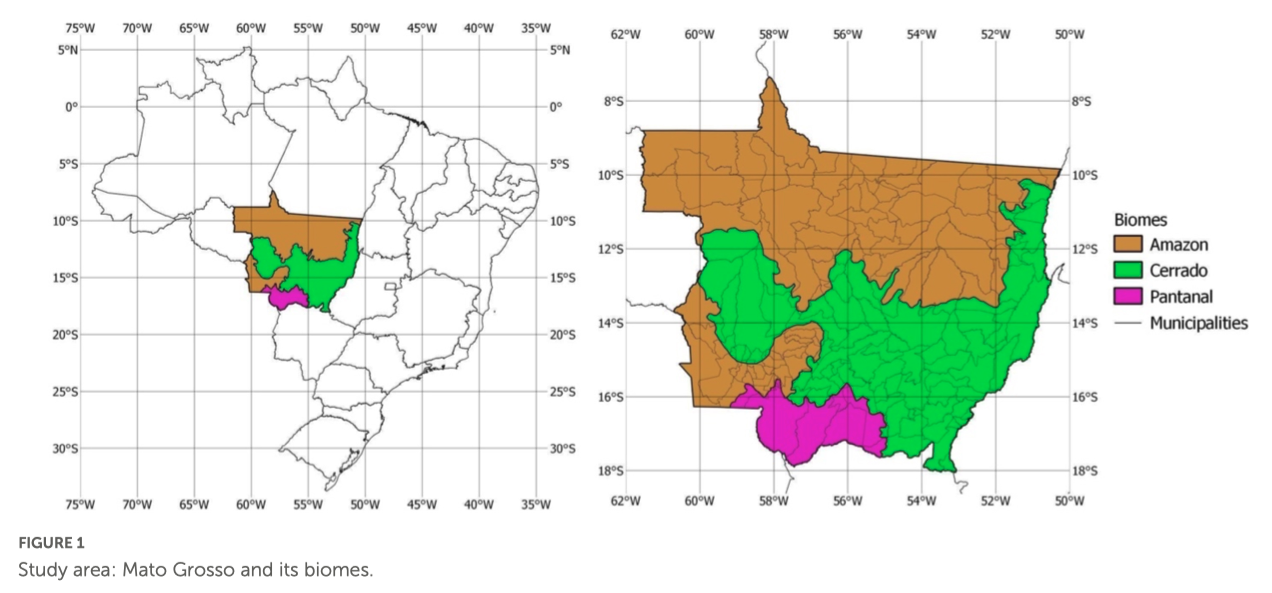
To learn the historical progression of deforestation, this study uses a model called a Cellular Automaton. This model divides space into a grid, representing how the state of each grid cell changes over time through interaction with its surroundings. It can account for the spatial dependence of deforestation, i.e., how deforestation at one point affects the probability of deforestation in surrounding areas. The data overview is as follows:
Deforestation data for Mato Grosso state, Brazil (2001-2016)
1km x 1km grids
Published by the Secretary of Environment
Utilizes multiple covariates such as roads, protected areas, elevation, and soil (10 variables in total)
Impacts of sudden deforestation events like disasters are considered using random numbers
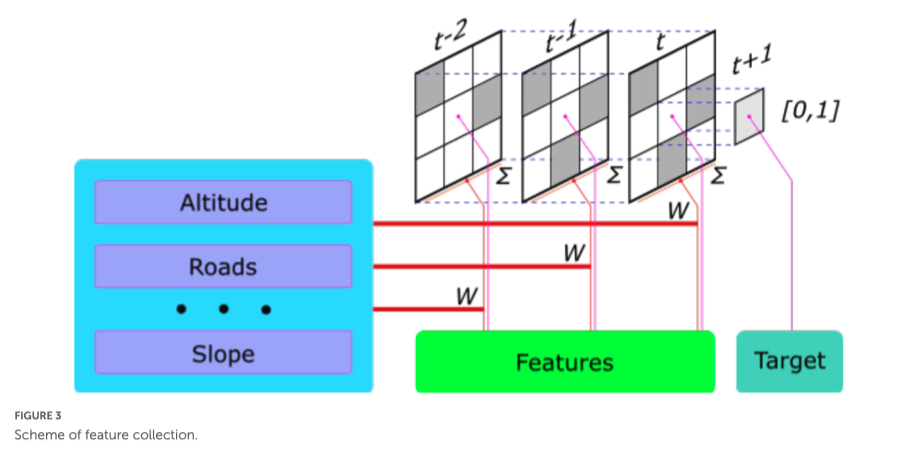
The model's output is the probability of deforestation occurring in each grid cell in the next period. To obtain a forest/non-forest map from this, a certain threshold is set, and cells exceeding it are classified as non-forest.
Policy changes are reflected in the model by adjusting this threshold. For example, to simulate a scenario where stricter logging regulations make deforestation generally less likely, the threshold is set higher, resulting in fewer pixels being identified as non-forest.