
Monthly: VCM Updates (November)
This article is an automatically translated version of the original Japanese article. Please refer to the Japanese version for the most accurate information.
This is sustainacraft Inc.'s newsletter. This edition is a Monthly VCM Update, primarily focusing on topics related to the Voluntary Carbon Market (VCM) and international regulations announced in November 2023.
Starting this month, we will add a brief update on the Pipeline for each Methodology to Section A. This month, we will cover VM0042, a new Methodology for Agricultural Land Management (ALM) for which the first Registration case was recently recorded.
Monthly VCM Update
This month's update includes the following:
A. Voluntary Carbon Credit Market Trends
- Issuance / Retirement Analysis
- Pipeline Trends by Methodology (VM0042)
B. Trends in Key International Regulations
- Trends in ART, one of the Jurisdictional REDD+ Registries
A. Voluntary Carbon Credit Market Trends (Verra)
1) Issuance / Retirement Analysis
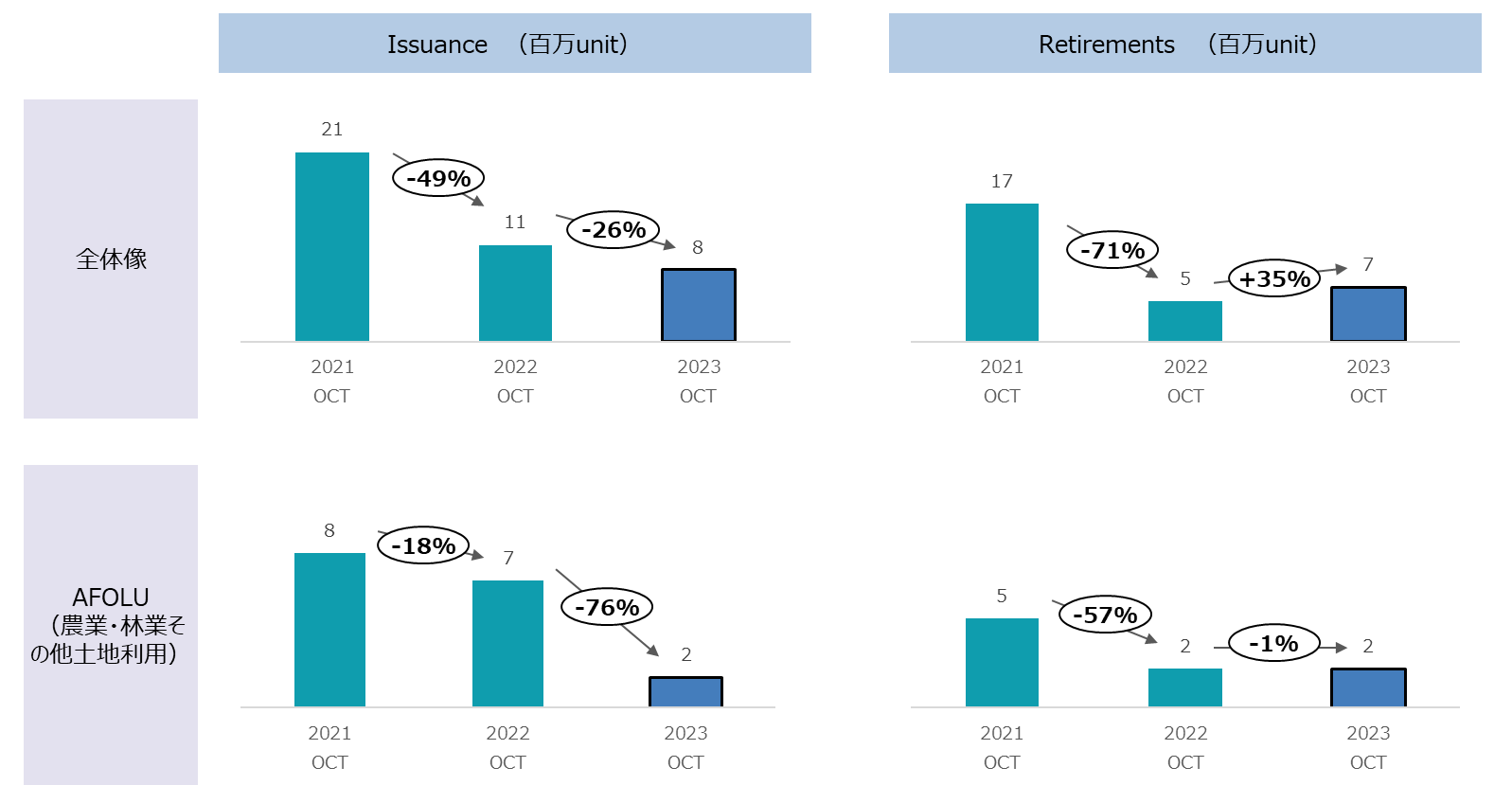
In October 2023, for Verra Voluntary Carbon Credits, 8,116,026 units were newly Issued, and 6,550,001 units were Retired. This represents a -26% decrease and a +20% increase, respectively, compared to the same month last year.
Focusing on the Agriculture, Forestry and Other Land Use (AFOLU) sector, 1,658,867 units were Issued, and 2,002,646 units were Retired. This represents a +20% increase and a +35% increase, respectively, compared to the same month last year.
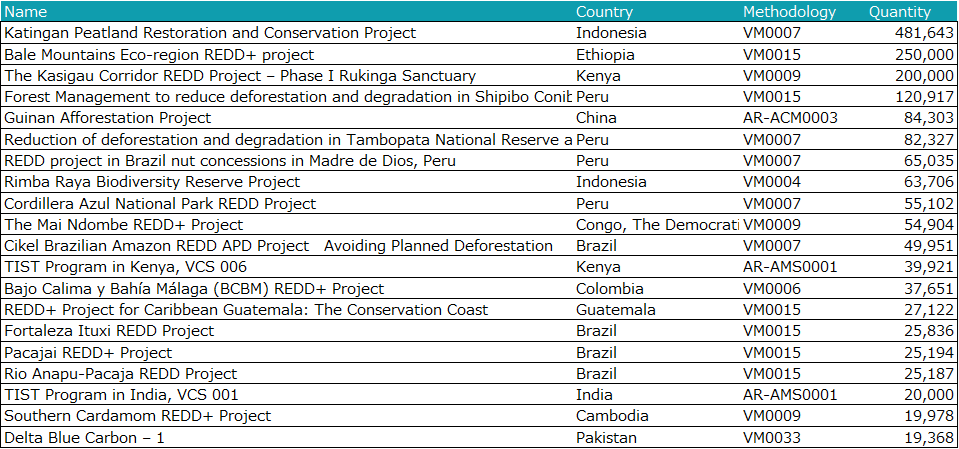
Here is a list of projects Retired in October 2023 (AFOLU sector only). The top 20 projects accounted for approximately 87% of all Retirements. By country of Retirement, Indonesia was the largest (27%), followed by Peru (17%), Kenya (14%), Ethiopia (12%), and Brazil (9%).
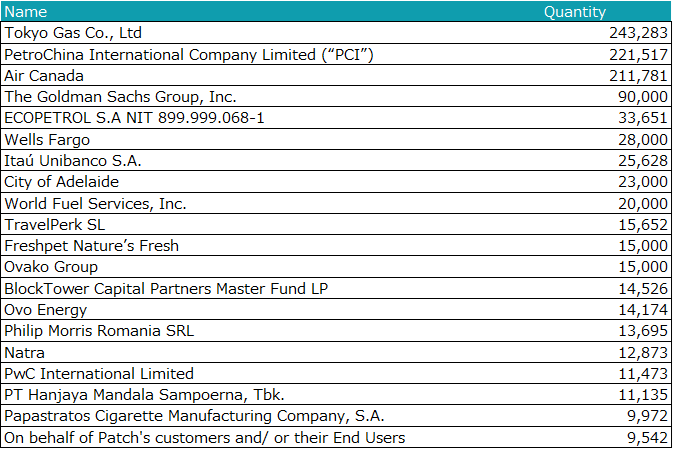
The top 20 companies that Retired Verra AFOLU sector Carbon Credits are listed below. Companies from the Energy, Finance, Aviation, and Consulting industries carried out these Retirements.
2) Pipeline Trends by Methodology (VM0042)
ALM refers to Verra's Methodology for Agricultural Land Management (ALM-related activities). We have covered this previously in the following articles:
Recently, the first Registration for this new VM0042 was achieved. Therefore, this time, we will examine the Pipeline projects under this Methodology.
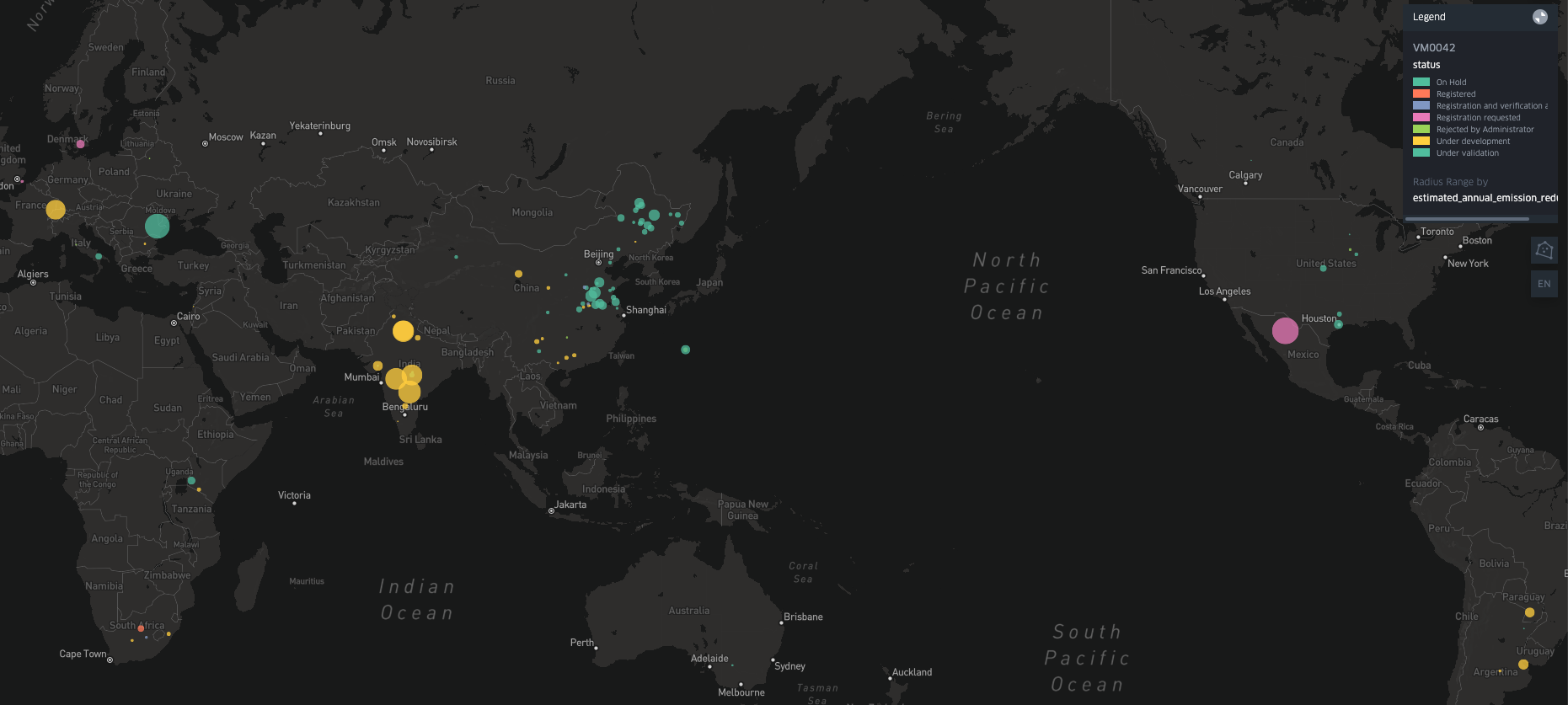
First, the geographical distribution is shown below. India and China account for the majority, with most projects in India being 'Under Development' and most in China being 'Under Validation' (colors indicate status). In terms of project scale, several projects in India are expected to deliver annual Sequestration/Emission Reductions of approximately 5 million tCO2, which is an extremely large scale even compared to REDD+ projects.
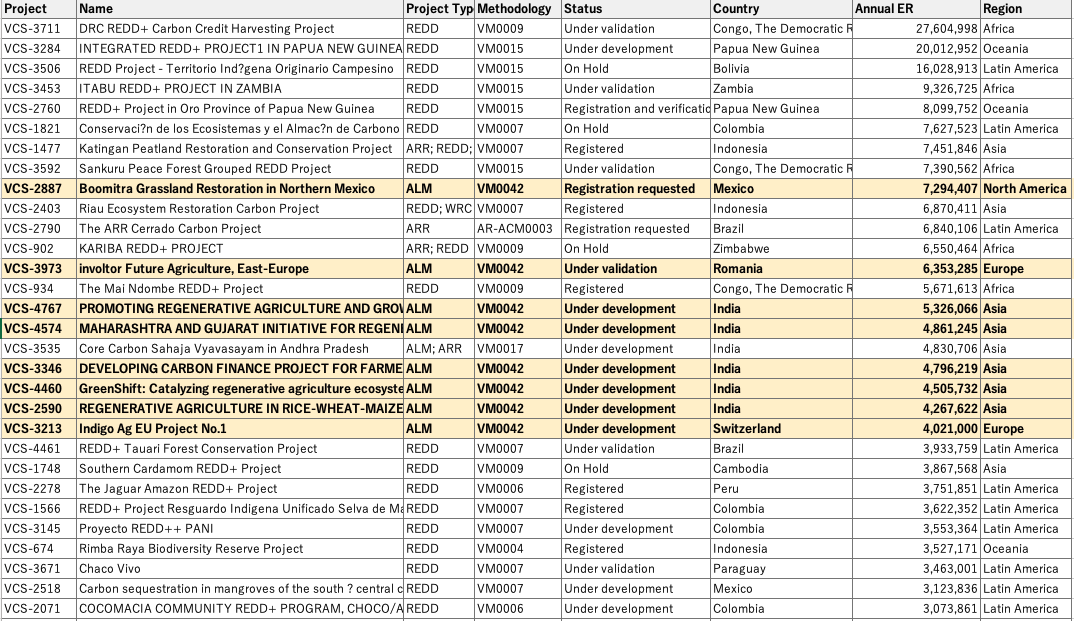
The table below shows the top 30 AFOLU projects currently in the Verra registry, ranked by annual Emission Reductions/Sequestration (Annual ER). While REDD+ projects generally dominate, VM0042 accounts for 8 projects, indicating a scale that could significantly change AFOLU supply. It is clear that these projects are on a similar scale to large-scale REDD+/WRC projects such as Katingan and Rimba Raya in Indonesia, which Japanese companies often procure.
Projecting this onto a timeline, the results are as follows1. VM0042 alone has projects in its Pipeline expected to generate approximately 70M tCO2 per year over the next 10 years.