
First VM0047 ARR Credits Issued
This is a new issue of newsletter from Deloitte Tohmatsu Sustainacraft.
Methodology Updates is a series that covers methodologies for carbon and biodiversity credits. In this article, we examine the world’s first credit issuance under VM0047, Verra’s dedicated ARR methodology, approved in April 2026. This milestone marks the first real-world implementation of VM0047’s dynamic baseline approach, a key feature designed to improve additionality and reduce over-crediting risks.
Building on our previous coverage of VM0047’s structure and the updates introduced in v1.1 (June 2025 newsletter), this article focuses on how the methodology was actually implemented in practice, with a detailed review of the Performance Benchmark calculation, monitoring approach, and key findings from the first issuance.
 sustainacraft Newsletter
For inquiries, please contact us here.
Author: Enes Satir (Carbon Specialist)
1. Introduction
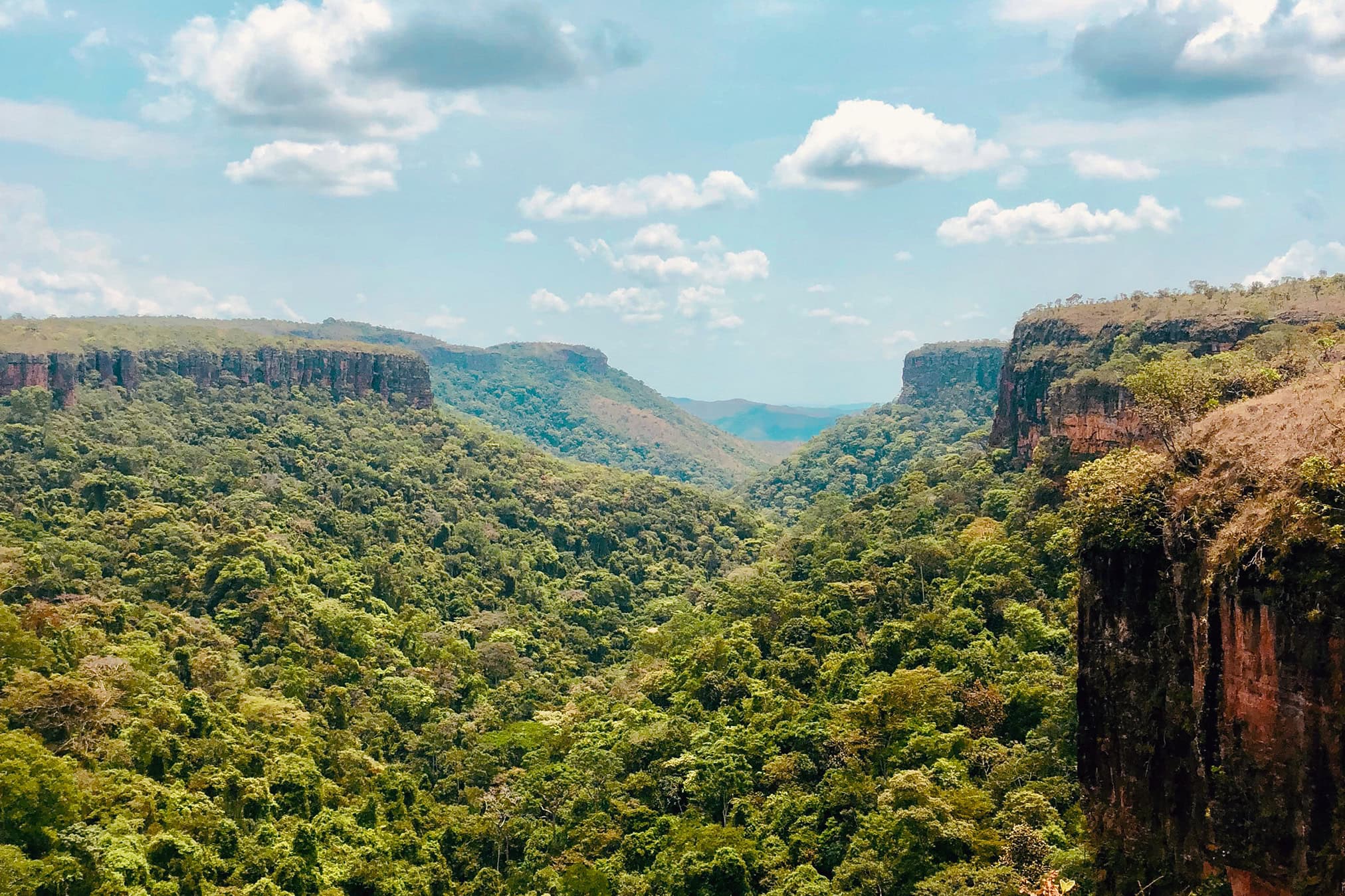
On April 21, 2026, Verra approved the world's first Verified Carbon Units (VCUs) under VM0047, its dedicated Afforestation, Reforestation and Revegetation (ARR) methodology. The project: Brazil Cerrado 1 (Verra Project 5511), developed by BTG Pactual Timberland Investment Group, which was issued 230,120 VCUs.
VM0047 is Verra's dedicated ARR methodology, published in 2023, and one of the few to receive ICVCM (Integrity Council for the Voluntary Carbon Market) Core Carbon Principles (CCP) approval. CCP approval is the highest integrity benchmark in the voluntary carbon market and a prerequisite for CORSIA eligibility. Please refer to our previous newsletter for the methodology's structure, v1.1 update, and its CCP approval.
This article focuses on VM0047’s dynamic baseline approach (Performance Benchmark), which measures tree growth against comparable non-restored land (control plots) to ensure only additional carbon gains are credited.

2. Key Findings
The first implementation of VM0047 resulted in a Performance Benchmark (PB) of 0.166, meaning that control plots exhibited only 16.6% of the vegetation growth observed in project plots during the monitoring period. Under the VM0047 framework, this portion is excluded from crediting as baseline (non-additional) growth. As a result, the project is credited for 83.4% of its measured biomass gains. This outcome indicates that natural regeneration in the control plots was minimal, and that most observed carbon sequestration can be attributed to project activities.
It also demonstrates that VM0047’s dynamic baseline approach can effectively distinguish project-driven growth from background regeneration, providing a more robust additionality assessment compared to traditional static baseline approaches.
3. Understanding the Dynamic Baseline (Performance Benchmark)
The central feature of VM0047 is a mechanism called the Performance Benchmark (PB). Before diving into how it was applied in this project, it helps to understand what it measures and why it exists.
"Performance" here refers to the vegetation growth of the planted trees, specifically, how much biomass has accumulated since planting. The benchmark compares this growth against what is happening on comparable nearby land that received no restoration (the control plots). Only the growth that exceeds the control plot level is credited as a genuine project contribution.
This approach was introduced to fix a long-standing problem in ARR carbon accounting. Older methodologies (such as VM0012) typically assumed a static baseline of zero: "without intervention, no biomass would grow." But even degraded land can regenerate naturally to some extent. If a project claims credit for vegetation growth that would have happened anyway, those credits are overstated. VM0047 addresses this by measuring the real-world counterfactual rather than assuming it, providing a more conservative but realistic baseline representation.
The benchmark is recalculated at each verification, so it adapts as conditions change over time. The following sections walk through how this was built and applied in practice, from the satellite-based measurement of tree growth to the selection of control plots, to the final credit calculation.