
Gold Standard's New Rice Methane Reduction Methodology "DREAM"
The latest issue of the newsletter by Deloitte Tohmatsu Sustainacraft Co., Ltd..
This series is a monthly report providing expert, in-depth analysis of the latest standards development and methodology trends in the carbon market. This article introduces "DREAM (Digital Rice Emission Avoidance Methodology)," Gold Standard's new methodology for reducing greenhouse gas emissions from rice cultivation, published for public consultation.
For inquiries, please contact us here.
Author: Yuki Nakamura (Carbon Specialist).
Overview
Methane (CH₄) emitted from flooded rice cultivation is one of the major greenhouse gas sources in the agricultural sector. Alternate Wetting and Drying (AWD)—an agricultural water management technique that periodically drains rice paddies to interrupt the anaerobic processes that generate methane—is widely researched as capable of reducing methane emissions by 30–70%, and has already been incorporated into major carbon credit methodologies including Verra, Gold Standard, and JCM.
However, ensuring environmental integrity and the objectivity of MRV (Measurement, Reporting, and Verification) in projects targeting smallholder farmers—numbering in the hundreds of thousands across developing countries—has been a long-standing challenge.
"DREAM," published by Gold Standard for public consultation, is a framework that addresses this challenge at the design level. It prevents over-crediting in drought years through dynamic, automatic baseline adjustment linked to rainfall data, while providing objective digital records of water management practices for small-scale projects through the institutionalization of satellite remote sensing-based MRV (dMRV).
If formally adopted, DREAM would establish a new global standard for rice methane reduction alongside VM0051 and Isometric, and is expected to accelerate large-scale aggregation projects centered on Southeast Asia. However, translating design improvements into real environmental impact will also require the development of practical conditions: the capacity of third-party verification bodies, the technical maturity of satellite dMRV, and the restoration of buyer confidence.
This article first explains the scientific basis of AWD and the overall structure of DREAM's methodology. It then describes in detail the methodology's key innovations: the dynamic weather coefficient and satellite dMRV. Finally, it compares DREAM with existing AWD methodologies to clarify its design differences and market implications.
For background on industry trends, please also refer to our previous newsletters (March 2025 Methodology Updates, Isometric's New Rice Methane Reduction Protocol, Verra's AWD Methodology VM0051 Approved for CORSIA).

 Nick Lau
 sustainacraft Newsletter
1. What is AWD?
When rice paddies are kept continuously flooded, water blocks oxygen from the soil, creating an environment where anaerobic microorganisms decompose organic matter and produce methane (CH₄). This is what makes flooded rice cultivation one of the largest greenhouse gas emission sources in the agricultural sector.
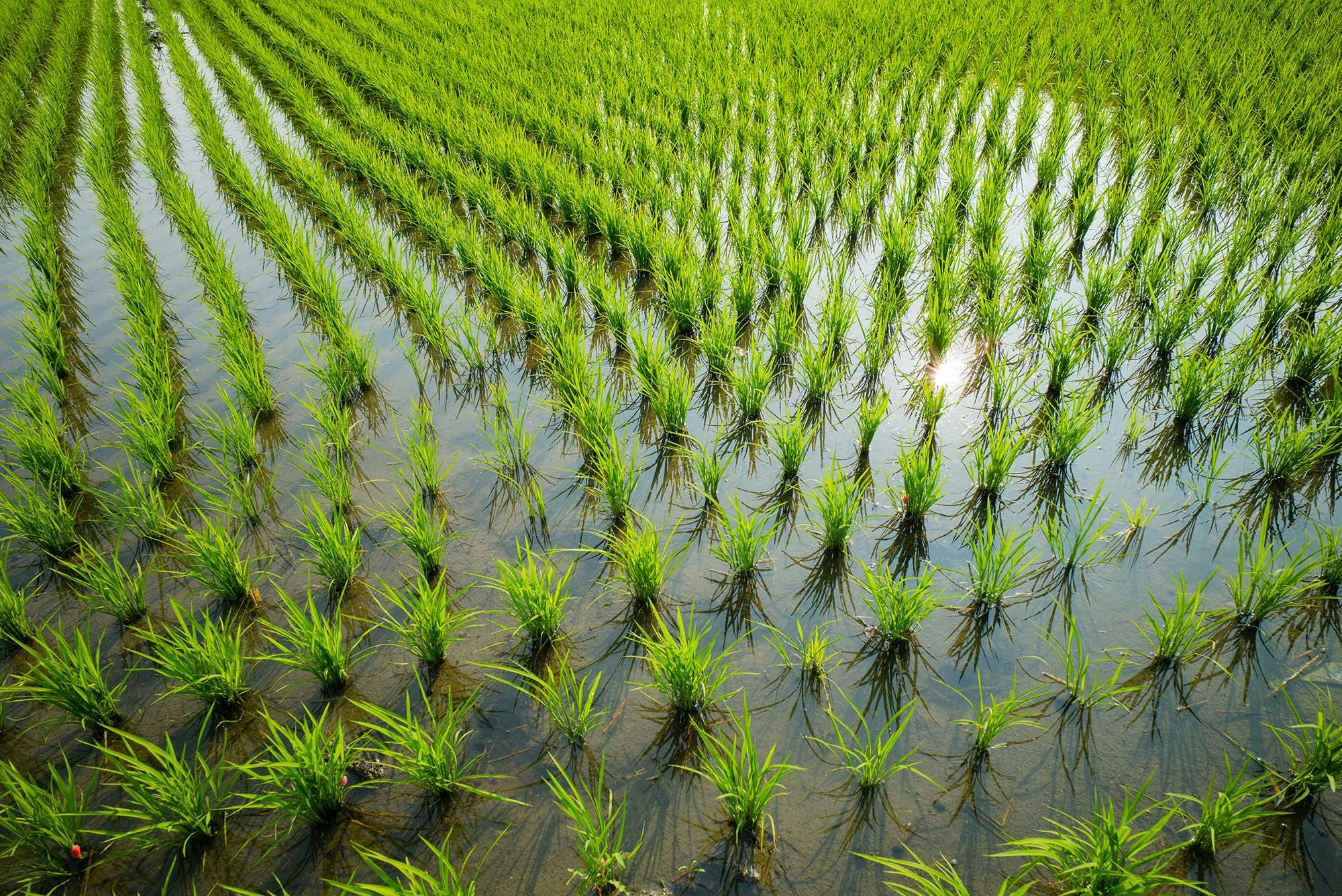
Alternate Wetting and Drying (AWD), rather than keeping paddies continuously flooded, periodically stops irrigation to lower water levels, deliberately creating periods when the soil becomes aerobic. In aerobic conditions, the activity of anaerobic microorganisms is suppressed, significantly reducing methane generation. By repeatedly cycling through drainage and reflooding, methane emissions can generally be reduced by 30–70%.
The magnitude of reductions varies depending on local soil, climate, organic matter inputs, and the depth and frequency of drainage, but AWD's effectiveness has been confirmed by research around the world and is positioned as the primary method for methane reduction in the agricultural sector. Based on this scientific evidence, AWD has already been incorporated into major carbon credit methodologies including Verra, Gold Standard, and JCM.
2. Overview of the DREAM Methodology
2.1 Eligibility and Scope
DREAM targets lowland rice cultivation systems where irrigation management is possible. The basic unit is the "Rice Cultivation Unit (RCU)"—a single contiguous field polygon (GIS-based)—and micro-fields smaller than 0.5 ha can be grouped together as "aggregated cluster polygons." Each RCU is registered in a central database and checked for spatial overlap with other projects. Splitting a single developer's projects into multiple Track 1 projects within a 1 km radius (debundling) is explicitly prohibited.
2.2 Six Modules
Greenhouse gas emissions from rice cultivation involve not only water management but a complex interplay of factors including residue management, fertilization, and variety selection. DREAM is designed with these interventions as six independent modules. All projects are required to adopt Module A as the mandatory core, with the flexibility to stack additional modules as desired.
Module A (Core – Water Management Change) is the only module mandatory for all projects. Farmers periodically stop irrigation to lower water levels, deliberately creating aerobic soil periods (AWD). By repeatedly cycling through drainage and reflooding, anaerobic processes are interrupted, significantly reducing methane emissions. During the flowering period—when yield risk is highest (the 10 days before and after the estimated flowering date)—a Flowering Lock mandates that flooding be maintained, embedding food security considerations at the algorithm level.
- Module B (Efficiency – Variety and Growing Season Optimization): Shortening the flooding period through direct-seeded rice (DSR) or early-maturing varieties.
- Module C (Reduction – Residue Management): Preventing field burning and anaerobic decomposition by removing straw from the field or composting it.
- Module D (Optimization – Nutrient Management): N₂O suppression by reducing synthetic nitrogen fertilizers. N₂O crediting is only available under Track 2.
- Module E (Enhancement – Biological Oxidation): Promoting decomposition of generated methane within the soil using methane-oxidizing bacteria and similar agents. A unique approach not found in other AWD methodologies.
- Module F (Carbon Removal – Carbon Amendment): Assessment of carbon storage through biochar application. Implemented in combination with the GS4GG PARC Methodology.
2.3 Dual-Track System: GHG Quantification and MRV Design by Project Scale
DREAM establishes two compliance tracks that switch between GHG quantification methods and water management monitoring approaches depending on project scale and technical capacity. The system lowers participation barriers for smallholder farmers by combining satellite dMRV with IPCC default coefficients (Track 1), while requiring direct-measurement-based quantification for larger projects or where high precision is needed (Track 2)—embedding the scale-accuracy trade-off directly into the institutional design. The annual 60,000 tCO₂e cap for Track 1 applies to the entire PoA or standalone project as a whole.
| Attribute | Track 1 (Distributed Digital) | Track 2 (High-Precision, Large-Scale) |
|---|---|---|
| Applicable Scale | Micro to small (≤60,000 tCO₂e/year) | Large (>60,000 tCO₂e/year), or SOC crediting |
| GHG Quantification | Conservative stratified default coefficients based on IPCC 2019 (Tier 1/Tier 2) | Direct gas measurement by closed chamber (Tier 3) or empirical Tier 2 |
| Water Management Monitoring | dMRV via satellite SAR data (Sentinel-1) | Measurement via water level sensors (real-time automatic transmission), etc. |
| Uncertainty Discount | Fixed 15% (raised to 20% if satellite classification accuracy falls below 80%) | Statistical error propagation (90% confidence interval; excess above 10% error is deducted) |
| Energy Emissions | Deemed zero (if no new fossil fuel equipment) | Actual calculation based on records of fuel and electricity |
| Module Restrictions | Module D (Nutrient Management) not available | All modules (A–F) available |